Transcript
0:00Paracetamol
Part five of our introduction to ADME: paracetamol, from dose to plasma curve. This part follows one drug, paracetamol, through absorption, distribution, metabolism and excretion, and then shows how the four processes shape its plasma concentration curve.
0:21Absorption
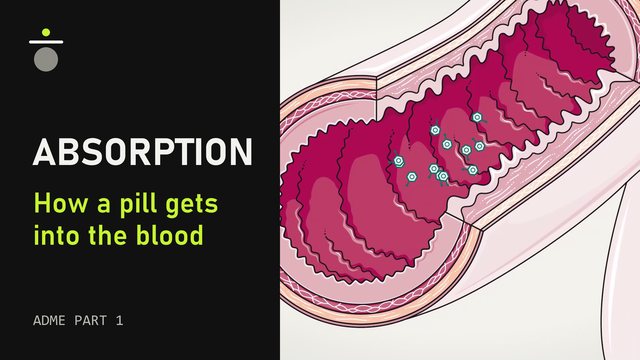
Paracetamol is also called acetaminophen. It is absorbed rapidly, and 70 to 90 percent of an oral dose reaches the systemic circulation, so its F is 0.7 to 0.9. The rate of absorption depends mainly on the rate of gastric emptying. Food slows gastric emptying, so food delays the absorption of paracetamol.
0:49Distribution
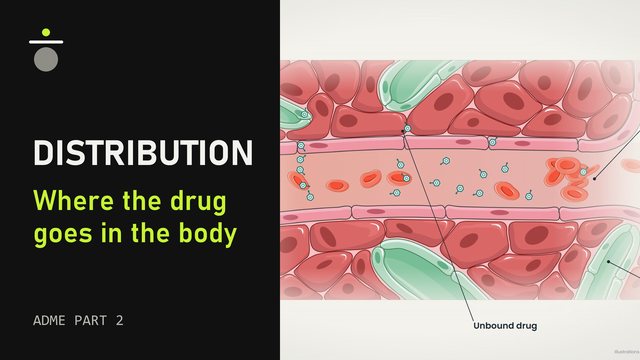
Paracetamol binds little to plasma proteins, and it distributes evenly through most tissues. It also crosses the blood-brain barrier, and the central nervous system is thought to be its main site of action.
1:04Metabolism and overdose
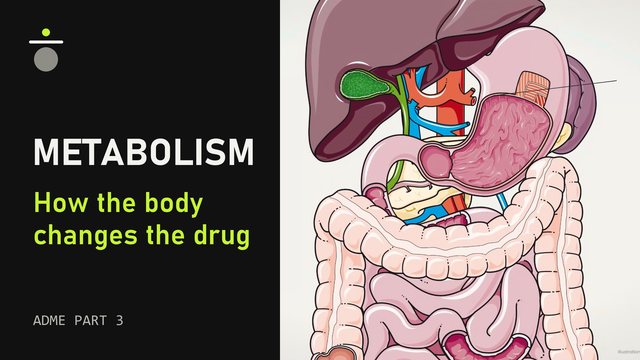
The liver metabolizes most of the dose by phase 2 reactions. UGTs form the glucuronide, and sulfotransferases form the sulfate. Both metabolites are inactive. CYP2E1 and other CYPs convert a small fraction to a reactive metabolite, NAPQI, which glutathione normally inactivates. After an overdose, sulfation and then glucuronidation reach their maximum rate, so a larger fraction of the dose forms NAPQI. NAPQI uses up the glutathione and then damages the liver cells. The antidote, acetylcysteine, restores glutathione.
1:51Excretion
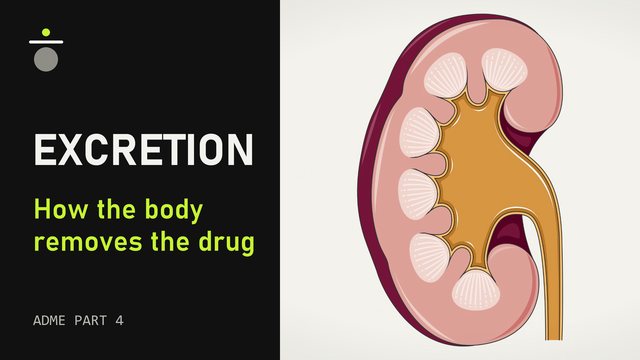
The kidneys then excrete the metabolites. Within 24 hours, 85 to 95 percent of a therapeutic dose appears in the urine, mainly as the glucuronide and the sulfate. Only about 4 percent is excreted unchanged.
2:10The plasma concentration curve
Pharmacokinetics measures these processes through the plasma concentration of the drug over time. Metabolism and excretion together are called elimination. After an oral dose, the concentration rises while absorption is faster than elimination. It reaches a peak, Cmax, at the time tmax, and then falls. The area under the curve, AUC, measures the exposure: the plasma concentration added up over time. The ratio of the AUC after an oral dose to the AUC after an equal intravenous dose is the bioavailability, F. The fall of the curve shows elimination. For paracetamol, the plasma concentration falls by half about every two hours: its half-life is about two hours. The half-life depends on two properties: how well the liver and the kidneys remove the drug from the plasma, and how far the drug spreads into the tissues.
3:16How ADME shapes the curve
Each process leaves its mark on this curve. Absorption sets how fast the concentration rises. Distribution into the tissues lowers the concentration that a given dose produces. Metabolism and excretion set how fast it falls. For paracetamol, the concentration falls by half every two hours, which is why a dose is repeated every 4 to 6 hours. This concludes our introduction to ADME.
Sources
- Forrest JA, Clements JA, Prescott LF. Clinical pharmacokinetics of paracetamol. Clin Pharmacokinet. 1982. PMID 7039926
- Mazaleuskaya LL, Sangkuhl K, Thorn CF, et al. PharmGKB summary: pathways of acetaminophen metabolism at the therapeutic versus toxic doses. Pharmacogenet Genomics. 2015. PMID 26049587
Illustrations adapted from Servier Medical Art (smart.servier.com), CC BY 4.0. Structures drawn with RDKit.